
.png)
Introduction
In 2025, Woodland Academy Trust published its AI Impact Report detailing how artificial intelligence tools are being embedded across its five primary schools to transform teaching, learning and workload practices. While the report examines a suite of AI solutions, Magma Maths has emerged as a standout digital partner in developing personalised, engaging and effective mathematics education aligned to the Trust’s pedagogical priorities.
Background: AI in Education at Woodland Academy Trust
Woodland Academy Trust, a multi-academy organisation serving primary pupils in Bexley and Kent has committed to thoughtfully embedding AI into classrooms with a clear focus on three key outcomes:
- Reduced teacher workload
- Improved pupil engagement
- Enhanced learning outcomes
These goals are articulated in the broader AI strategy that underpins the Trust’s work with emerging educational technologies. Among these tools, Magma Maths has been highlighted as an effective platform that supports teachers and learners in mathematics.
Why Magma Maths Matters in the Trust’s AI Ecosystem
1. Supporting Teachers to Plan Better
The Trust’s report shows that teachers using AI tools, which include ChatGPT, Magma Maths and others have significantly reduced lesson planning time, enabling them to focus more on creative teaching and direct pupil engagement. Thoughtful use of platforms like Magma Maths means teachers can leverage pre-constructed activities, visual tools, and curriculum-aligned prompts to design rich maths lessons quickly and confidently.
“Teachers halved their planning time while improving lesson quality, confidence, and efficiency.”
This kind of impact speaks directly to one of the most pressing issues in education today: balancing professional workload with instructional quality.
2. Enhancing Engagement and Learning in Maths
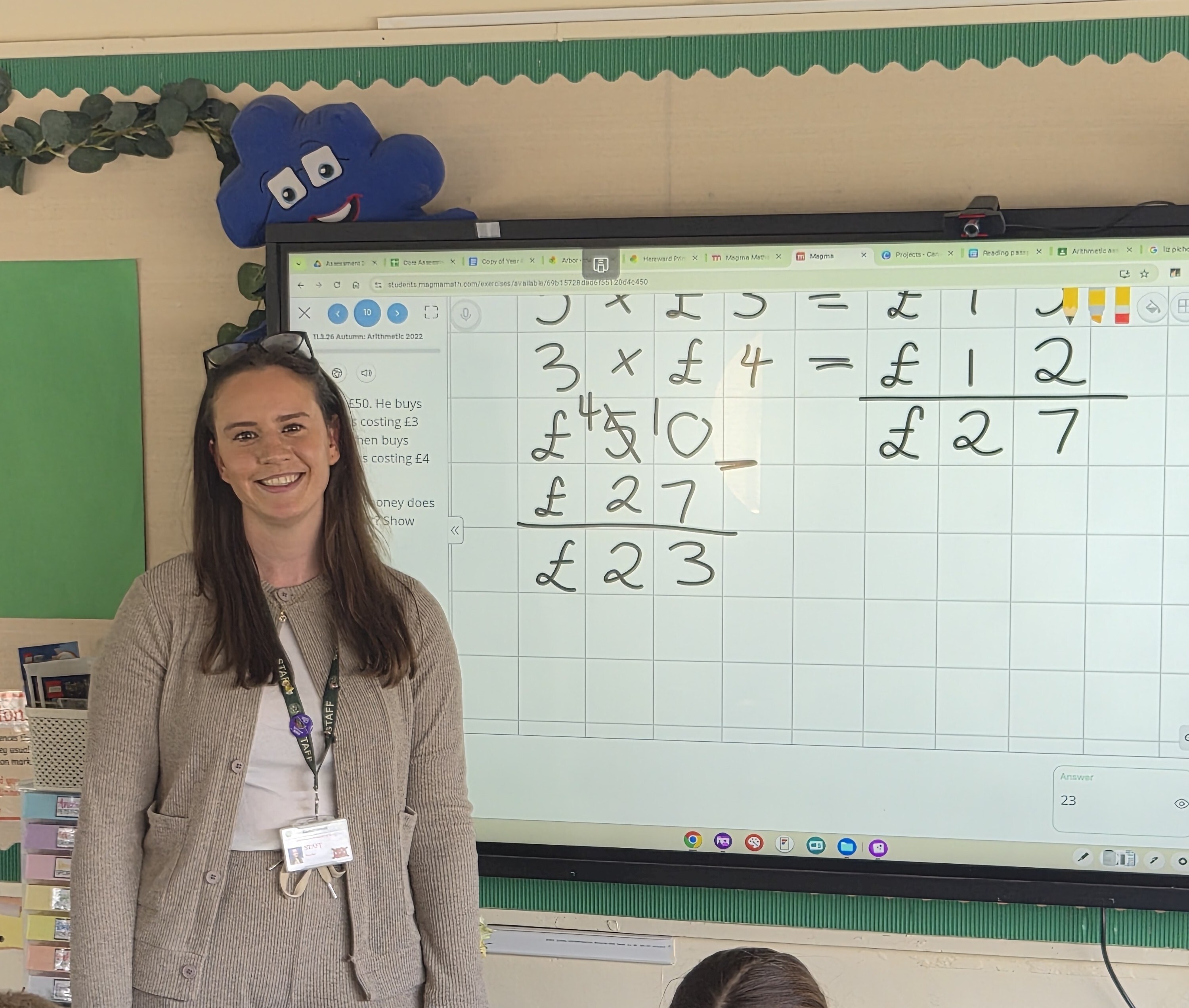
Magma Maths is not just an efficiency tool - it’s instrumental in fostering active pupil engagement. In Trust-wide case studies, pupils expressed enjoyment and heightened curiosity when using Magma Maths across iPad devices deployed in classrooms.
Students reported that interactive components such as visual maths representations and hint-giving bots made problem solving fun and accessible. Teachers also noted they could more quickly identify and support learners who were struggling in real time.
“It’s really fun because it’s like different ways to learn… and when they get that light-bulb moment, it’s just amazing to see.” - Peareswood Primary School pupil & teacher testimony.
3. Personalised Support and Inclusion
One of the desired outcomes of the Trust’s AI initiative is inclusive practice, whereby technology enables differentiation without extensive workload increases for staff. Platforms like Magma Maths help achieve this by:
- Offering adaptive maths practice that responds to individual pupil progress.
- Providing hints and scaffolded task supports for learners with a range of needs.
- Helping teachers monitor progress through immediate feedback and visual dashboards.
This aligns with the Trust’s overarching goal of equity, ensuring every child has access to learning that meets their needs without sacrificing challenge or quality.
4. Strengthening Professional Practice
Teachers involved in the Trust’s AI programme report that using Magma Maths has enhanced their confidence and instructional strategies in mathematics. The immediacy of data and feedback has allowed educators to make timely decisions, freeing them to interact more meaningfully with pupils during lessons.
“Magma Maths has transformed how we approach mathematics. It not only helps pupils grasp complex concepts but also empowers teachers to adapt their strategies based on real-time insights.” - Woodland Academy Trust teacher quoted in external coverage.
This reflects a broader theme in the Trust’s AI Impact Report: AI should enhance professional judgement, not replace it.
Lessons Learned and Looking Forward
Woodland Academy Trust’s journey shows that strategic adoption of AI, including platforms like Magma Maths can lead to measurable benefits in workload, engagement and learning. Their experience offers useful lessons for other schools and trusts considering similar innovation:
- Integration matters: Technology works best when aligned with pedagogical goals and supported by professional development.
- Human expertise remains central: Teachers drive learning; AI amplifies their impact.
- Balanced evaluation: Impact needs to be measured not just by time saved, but by deeper learning and inclusion outcomes.
As AI continues to evolve in education, tools like Magma Maths will play a critical role in shaping how young learners access and enjoy maths while supporting teachers to thrive professionally.
Request a demo and see how Magma Maths supports real-time assessment

.png)